Figure Legend Attribution: How to Add Proper Credit in Scientific Manuscripts
In This Article
Why figure legend attribution matters before submission
Figure legend attribution is the short, precise credit line that tells readers, reviewers, and editors where reused visual material came from and whether you had permission to use it. If you reuse an icon, map, dataset layer, schematic element, photograph, or adapted panel, the figure legend should make that reuse clear. Do not hide the credit in the acknowledgments. Do not assume a reference citation alone is enough.
Editors see attribution problems constantly. The science may be sound, but a missing credit line can delay acceptance, trigger permissions questions, or force a redesign during proofing. The fix is not complicated. You need to name the source, state the reuse type, mention the license or permission status, and connect the credit to the exact panel.
This guide focuses on wording patterns for authors reusing icons and maps, because those are frequent sources of confusion. Icons often come from design libraries with license terms. Maps may combine basemaps, boundary files, satellite data, and author annotations. Each layer can require different credit.
If you are building figures from scratch and want cleaner editable visuals, you can create with Graffiy and keep your attribution notes organized while designing. Still, even original figures may contain reused components, so the legend needs to be accurate.
What counts as reused visual material?
Reused material is any visual element you did not fully create yourself. That includes a published panel, an icon from a library, a screenshot, a stock illustration, a map tile, a satellite image, a public domain photograph, or a government dataset rendered as a map. It also includes modified versions of those materials.
Many authors think attribution is only needed when an entire figure is copied. That is too narrow. A single icon can carry a license. A basemap can require credit even if your data points are original. A redrawn pathway may still be adapted from a published source if its structure, layout, or grouping follows that source.
For manuscripts, a practical test is simple: if a reader asked, “Where did this visual element come from?” would the answer be “not entirely from us”? If yes, add figure legend attribution. If the source requires a specific credit line, use that language unless the journal asks for a different format.
Attribution does not automatically solve copyright. Credit and permission are separate. A license may allow reuse with credit. A journal may still require proof. A publisher may require formal permission even when you cite the source. When in doubt, check the journal instructions and the source terms before submission.
Figure legend attribution wording editors understand
Good figure legend attribution is not decorative. It is a permissions signal. Editors want to know what was reused, where it came from, whether it was changed, and whether reuse is allowed. The wording should be boring, direct, and specific.
Use this structure: panel identifier, reuse verb, source, permission or license, and changes. For example: “Panel B contains icons from [source], used under [license], with color modifications.” This is much clearer than “Image credit: various sources.”
Here are the core verbs editors understand. Use “reproduced from” when the visual is copied with little or no change. Use “adapted from” when you changed content, layout, labels, colors, or emphasis. Use “modified from” when the source remains recognizable but you altered presentation. Use “created with” only when the tool helped produce an original figure, not when it supplied third party content.
Be careful with “redrawn from.” It sounds original, but it may still be derivative. If the arrangement, relationships, or data presentation follows a source, “adapted from” is usually safer. Editors prefer honest specificity over clever wording.
A strong formula is: “Reproduced from Smith et al. (2022) with permission from Elsevier.” Another is: “Adapted from Jones et al. (2021), licensed under CC BY 4.0.” For icons, write: “Icons in panels A and C are from The Noun Project, used under license, with color changes.”
If you have multiple sources in one figure, tie each source to its panel. Avoid a long generic sentence at the end that leaves the editor guessing. “Panels A and B adapted from...” is better than “Some elements adapted from...” because it identifies exactly what was reused.
Exact wording patterns for common reuse cases
The safest figure legends use repeatable patterns. You can adjust names, dates, licenses, and panel labels, but the grammar should stay direct. The examples below are intentionally plain. Editors do not need flourish. They need clarity.
| Situation | Editor-ready wording pattern |
|---|---|
| Published figure copied unchanged | “Panel A reproduced from [Author] et al. ([Year]) with permission from [Publisher].” |
| Published figure adapted | “Panel B adapted from [Author] et al. ([Year]) under [license or permission], with labels simplified.” |
| Icon library used | “Icons in panels C and D are from [Icon source], used under [license], with color modifications.” |
| Open license image | “Image in panel A adapted from [Creator], licensed under CC BY 4.0.” |
| Map basemap reused | “Basemap data from [Provider]; study locations and labels added by the authors.” |
| Public domain source | “Photograph from [Agency or archive], public domain; cropping and annotations by the authors.” |
For Creative Commons material, include the license name and, when possible, a link in your reference list or permission documentation. The Creative Commons license overview explains the main license types and conditions. Remember that CC BY requires attribution. CC BY-SA may require sharing adaptations under the same license. CC BY-NC can be problematic for journals with commercial distribution.
For maps, do not credit only the software. “Map made in QGIS” tells editors the tool, not the data source. You may need to credit OpenStreetMap, Natural Earth, a national mapping agency, a satellite provider, or a boundary dataset. If your map uses OpenStreetMap data, check the current requirements at OpenStreetMap copyright and license information.
How to attribute icons in figure legends
Icons are easy to overlook because they feel small. In a manuscript figure, however, icons can carry the same attribution burden as larger images. If you download a microscope icon, cell icon, animal silhouette, hospital icon, or transport symbol, check the source license before inserting it.
A clean icon attribution should name the panels and the source. If the icons are free with attribution, include that credit. If you purchased a license, say “used under license” when the license does not require a more specific phrase. If the journal asks for documentation, upload the license receipt or terms as permissions material.
Use this pattern for a single source: “Icons in panels A to C are from [source], used under [license], with color and size modifications.” This tells editors the icons were not original and that changes were made.
Use this pattern for mixed sources: “Cell and tissue icons in panel B are from [source 1], licensed under [license]. Equipment icons in panel C are from [source 2], used under license.” Mixed sources are common in graphical abstracts, so panel-level clarity helps.
Do not write “icons adapted from Google.” Search engines are not sources. Credit the actual creator, library, or license provider. Also avoid “icons are copyright free” unless the source uses that exact legal language. Better wording is “public domain,” “CC0,” “licensed under CC BY 4.0,” or “used under institutional license.”
If you edited icons heavily, attribution is still usually needed. Changing colors or line thickness does not erase the source. For figure legend attribution, assume that recognizable origin matters more than how much time you spent editing.
How to attribute maps, basemaps, and geographic data
Maps deserve special care because they often combine several layers. A manuscript map might contain a basemap, administrative boundaries, road networks, elevation shading, satellite imagery, and your own sampling points. Each layer may have its own source.
Start by listing the layers. Ask: what is the basemap? Where did boundaries come from? Are coordinates or sample locations original? Did you use satellite imagery? Did you use a map screenshot from a web service? This inventory prevents vague attribution later.
For a simple study location map, use wording like: “Basemap data from OpenStreetMap contributors; sampling locations and labels added by the authors.” If you use Natural Earth boundaries, write: “Country boundaries from Natural Earth; case locations plotted by the authors.” If you use government data, name the agency and dataset.
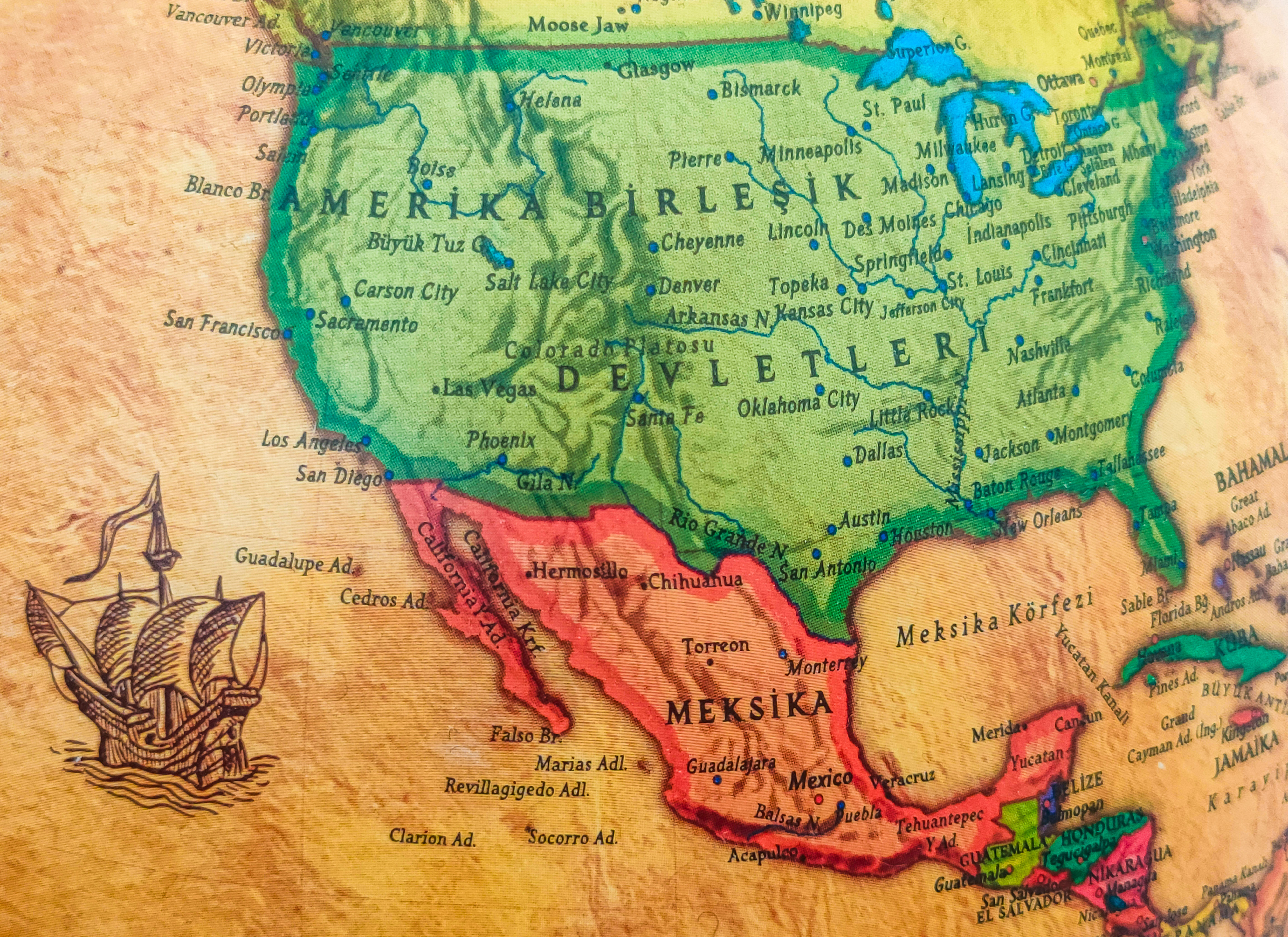
For satellite imagery, include the provider and any required product name. A useful pattern is: “Satellite image in panel A from [Provider or mission], acquired [date if relevant]; annotations and scale bar added by the authors.” Some providers require exact language, so read the terms.
Avoid the phrase “map created by authors” if the map contains third party data. You can say: “Map assembled by the authors using boundary data from [source] and basemap data from [source].” That sentence gives you credit for the design while still crediting the underlying sources.
What to include when a figure is adapted
Adapted figures are where many attribution lines fail. Authors often write “modified from” without saying what changed. Editors may then ask whether permission was needed. A stronger note explains the adaptation in a short phrase.
Use wording such as: “Adapted from [Author] et al. ([Year]) with permission from [Publisher]; pathway labels shortened and colors changed.” Or: “Adapted from [source], licensed under CC BY 4.0; panel order and annotations modified.” These phrases show that you understand the difference between copying and adapting.
If your figure is based on data rather than a visual layout, be more precise. Write: “Graph generated by the authors using data from [source].” If the original figure design was not reused, this wording is better than “adapted from.” It credits the data without implying that you copied the figure.
If you redraw a conceptual model from a paper, use “adapted from” unless your model is independently reorganized. A redrawn version can still be an adaptation. The visual style may be new, but the intellectual structure may not be.
When permission was granted by email or a publisher portal, mention permission in the legend. Example: “Reproduced from [Author] et al. ([Year]) with permission from [Publisher].” Keep the approval document in your submission files. Editors may ask for it even after peer review.
Placement, punctuation, and citation style
Place figure legend attribution at the end of the legend, after the scientific explanation. If only one panel uses reused material, identify that panel first. If the whole figure is reused or adapted, the attribution can apply to the full legend.
A typical legend can read: “Figure 2. Overview of sample collection sites. Circles indicate sampling locations, and colors indicate collection year. Basemap data from OpenStreetMap contributors; sampling locations added by the authors.” That is compact and editor friendly.
Follow the journal’s reference style for citations. Some journals prefer author-date in legends. Others use numbered references. Attribution and citation can work together: “Adapted from Smith et al. [12] with permission from Springer Nature.” The reference points to the source, while the permission phrase explains reuse rights.
If the source requires a URL, include it where the journal allows. Some journals permit URLs in legends. Others prefer permissions files or reference list entries. Do not cram every license URL into a figure legend if it makes the legend unreadable. The legend should remain useful to readers.
For a multi-panel figure, semicolons are your friend. Example: “Panel A adapted from [source] under CC BY 4.0; panel B icons from [source], used under license; panel C created by the authors.” This format is concise and precise.
Common mistakes that slow down publication
The biggest mistake is vague credit. “Sources: internet” or “adapted from previous studies” will not satisfy an editor. Name the source. Name the license or permission status. Name the panel.
The second mistake is confusing citation with permission. A reference citation supports scholarship. It does not prove that you can reuse a visual. For copyrighted figures, you may need formal permission even if the paper is cited correctly.
The third mistake is overclaiming originality. If you use third party icons, do not call the figure “created entirely by the authors.” Better wording is: “Figure assembled by the authors using icons from [source].” That is accurate and defensible.
The fourth mistake is ignoring map data. Many map services require visible attribution. If you crop a map screenshot and remove the provider credit, you may violate the terms. Build the credit into the figure legend or the figure itself, depending on the provider’s instructions.
The fifth mistake is using incompatible licenses. A noncommercial icon license may not fit a journal published by a commercial publisher. A share-alike license may create obligations for adapted material. If a license is unclear, choose another icon or create the visual yourself.
Practical rule: if an editor cannot tell what was reused, where it came from, and why reuse is allowed, your attribution is not finished.
A final checklist before you submit
Before submission, review every figure and ask five questions. Did we reuse any icon, map layer, image, panel, diagram structure, or dataset? Is the source named in the legend? Is the reuse described as reproduced, adapted, modified, or author-created? Is the license or permission status stated? Are changes described when relevant?
Then check consistency. If the Methods section names a map dataset, the figure legend should not credit a different source. If the permissions file says “reproduced,” the legend should not say “adapted” unless you changed the figure and permission allows it. Small inconsistencies can create unnecessary editorial queries.
Finally, save evidence. Keep license pages, permission letters, download receipts, and source URLs. For open licenses, capture the license version and access date if your field uses access dates. This documentation protects you when a journal asks for proof during production.
Proper figure legend attribution is not busywork. It respects creators, protects your manuscript, and helps editors move faster. The best wording is specific, short, and attached to the exact panel. If you make that your habit, attribution becomes a normal part of figure design rather than a stressful final task.
Frequently Asked Questions
What is figure legend attribution?
Figure legend attribution is the credit line in a figure legend that identifies reused visual material and explains its source, license, or permission status. It should be specific enough for an editor to see which panel contains reused content and why the reuse is allowed.
Do I need attribution for icons if I changed the color or size?
Yes, in most cases you still need attribution if the icon came from an outside source. Color changes, resizing, and minor edits usually do not remove the need to credit the creator or license provider. Use wording such as “Icons in panel B are from [source], used under [license], with color modifications.”
How should I credit a map in a figure legend?
Credit the underlying map data, not just the software used to make the map. A clear pattern is “Basemap data from [provider]; sampling locations and labels added by the authors.” If you used multiple layers, identify each important source in the legend or supporting permissions documentation.
Written by
Shobajo AbdulAzeez
Tags
Share this article